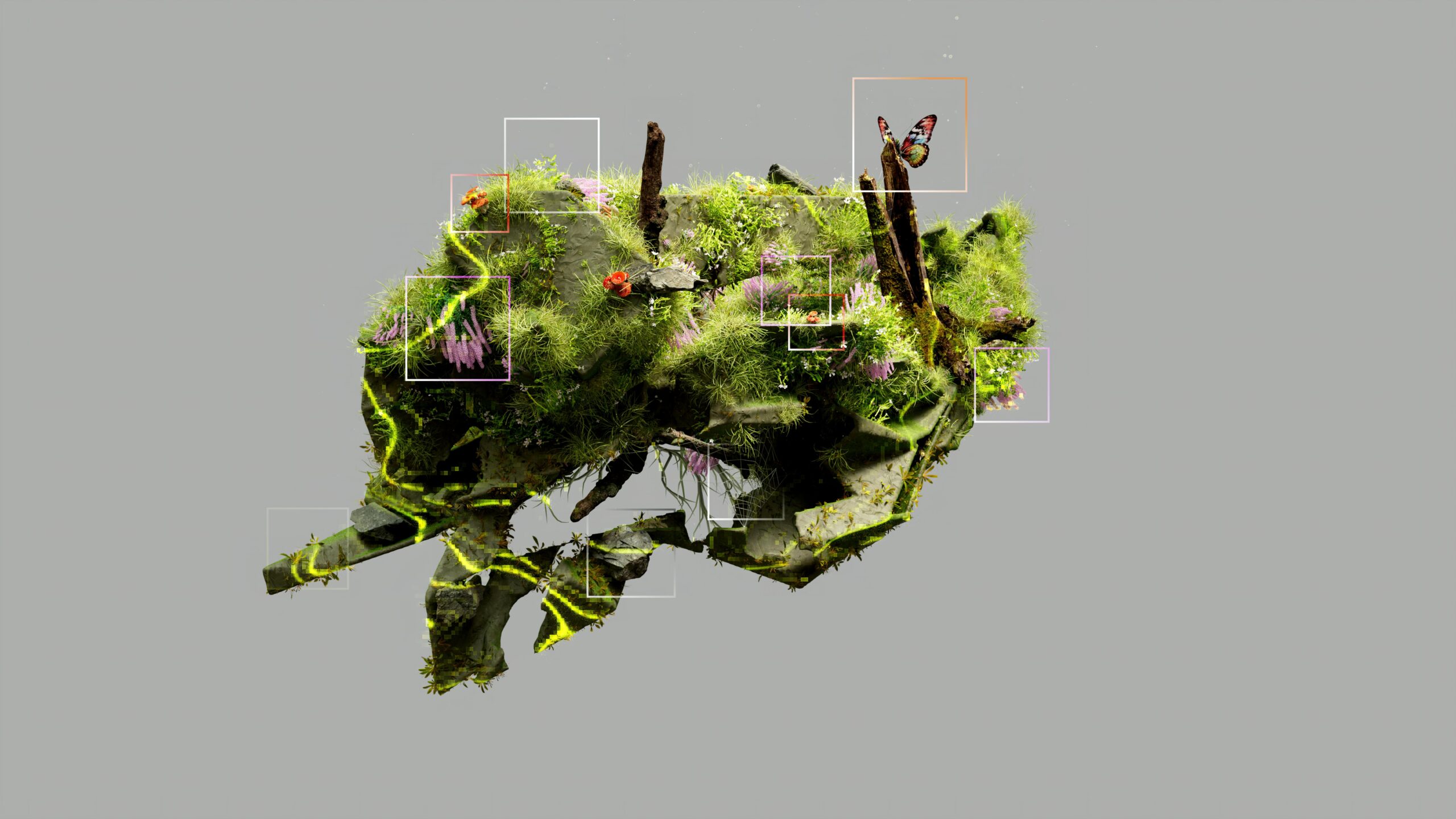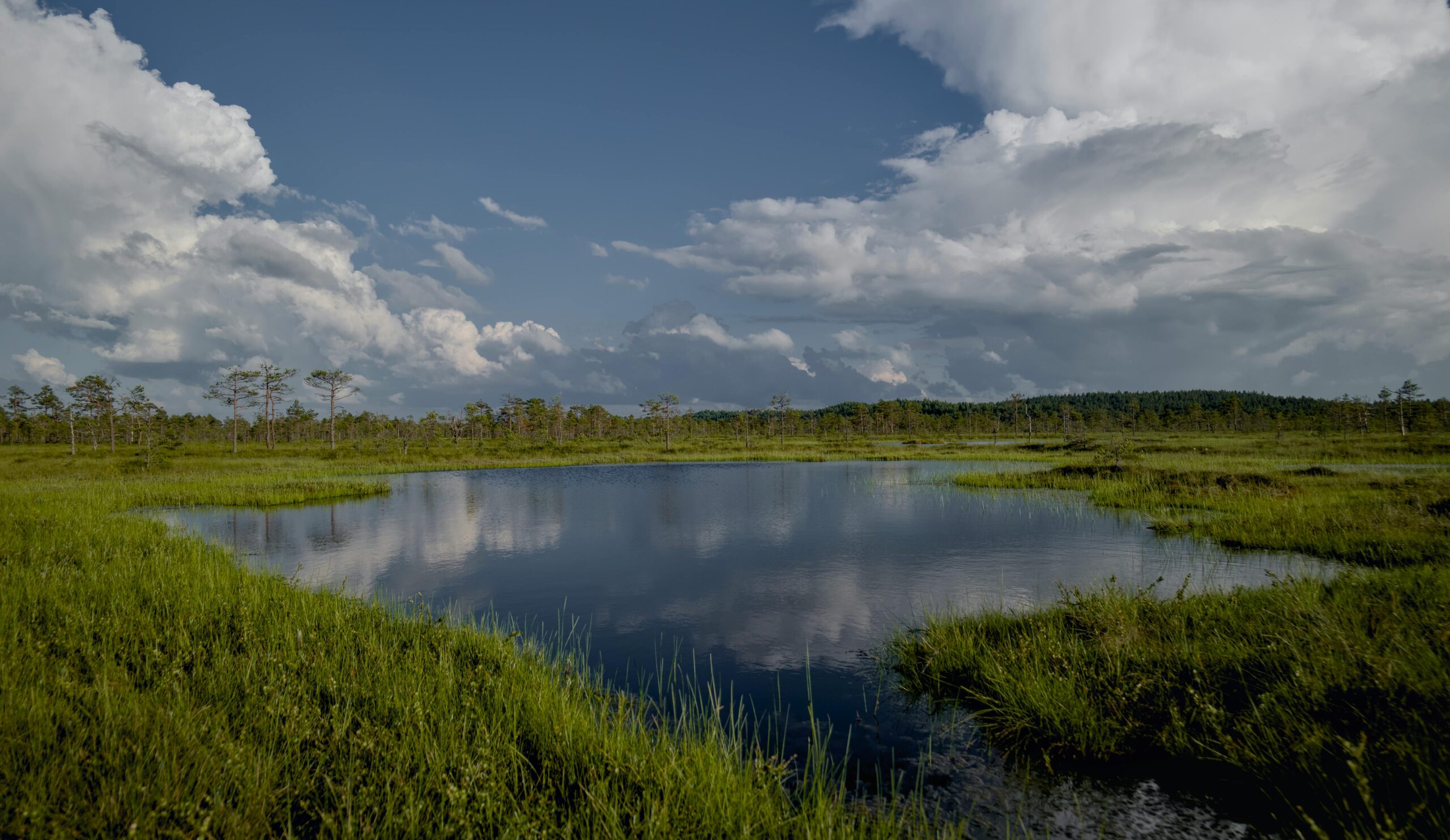
Nature reveals itself through mesmerizing mathematical patterns that surround us daily, from the spirals of shells to the symmetry of snowflakes, creating a visual language of universal harmony.

🌿 The Mathematical Blueprint Hidden in Plain Sight
Walk through any forest, garden, or beach, and you’ll witness an extraordinary phenomenon: nature’s inherent geometry. This isn’t random chaos but rather an organized system of patterns, proportions, and symmetries that have evolved over millions of years. Scientists, mathematicians, and artists have long been fascinated by these natural designs, recognizing that the same geometric principles appear repeatedly across different scales and species.
The beauty of nature’s geometry lies in its efficiency and elegance. Plants arrange their leaves to maximize sunlight exposure, seashells grow in spirals to maintain structural integrity while expanding, and honeycombs form hexagonal patterns to optimize space and material usage. These aren’t conscious design choices but rather evolutionary solutions to complex problems, refined through countless generations.
✨ The Golden Ratio: Nature’s Favorite Proportion
Perhaps no mathematical concept appears more frequently in nature than the golden ratio, approximately 1.618, represented by the Greek letter phi (φ). This special number describes a proportion where the ratio of the whole to the larger part equals the ratio of the larger part to the smaller part. It sounds abstract, but its manifestations are remarkably concrete and visually stunning.
The golden ratio appears in the arrangement of flower petals, with many species displaying numbers from the Fibonacci sequence: 3, 5, 8, 13, 21, or 34 petals. Sunflowers showcase this principle magnificently, with their seeds arranged in spirals that correspond to consecutive Fibonacci numbers. This arrangement allows the sunflower to pack the maximum number of seeds into its flower head, demonstrating nature’s optimization through mathematics.
Human faces considered beautiful often exhibit proportions close to the golden ratio. The distance between facial features, the length of the face compared to its width, and even the proportions of individual features frequently align with this mathematical constant. This suggests our aesthetic preferences may be deeply rooted in patterns we subconsciously recognize from the natural world around us.
Where the Golden Ratio Appears in Nature 🌻
Beyond sunflowers and human proportions, the golden ratio manifests throughout the biological world. Pinecones display spirals in both directions, with the number of spirals typically being consecutive Fibonacci numbers. The nautilus shell grows in a logarithmic spiral that approximates the golden ratio, creating that iconic shape that has inspired artists and architects for centuries.
Tree branches often divide according to Fibonacci patterns, with the main trunk splitting into branches in sequences that follow this mathematical relationship. Even the proportions of our own bodies reflect these ratios: the distance from your fingertips to your elbow compared to your wrist to your elbow, or your total height compared to the distance from your navel to the ground.
🔷 Sacred Geometry: Patterns That Transcend Cultures
Sacred geometry refers to geometric patterns and shapes that hold symbolic meaning across different cultures and spiritual traditions. These patterns appear consistently in nature, suggesting a fundamental organizing principle in the universe. The circle represents wholeness and unity, appearing in tree rings, ripples on water, and celestial bodies. The triangle symbolizes stability and balance, visible in mountain peaks and the structural support systems of plants.
The hexagon represents efficiency and community, as demonstrated by honeybee colonies. Bees construct their honeycombs in perfect hexagonal cells because this shape uses the least amount of wax while providing maximum storage space and structural strength. This geometric solution emerges naturally from the physical properties of beeswax and the bees’ building process, creating a pattern that mathematicians recognize as optimal.
Fractals: Infinite Complexity from Simple Rules 🌲
Fractals represent one of nature’s most fascinating geometric principles: self-similarity across different scales. A fractal pattern looks similar whether you zoom in or out, with smaller parts resembling the whole structure. This property allows nature to create immense complexity from relatively simple mathematical rules, making fractals incredibly efficient design solutions.
Trees exemplify fractal geometry beautifully. The trunk splits into branches, which split into smaller branches, which split into twigs, each division following similar patterns. This fractal branching maximizes the tree’s ability to capture sunlight and exchange gases with the atmosphere while maintaining structural integrity. The same principle applies to root systems underground, creating mirror-image fractals that optimize water and nutrient absorption.
Coastlines, mountain ranges, river networks, and cloud formations all display fractal characteristics. Ferns and broccoli (particularly Romanesco broccoli) show stunning fractal patterns visible to the naked eye. Lightning bolts branch fractally as they seek the path of least resistance through the air. Even our own circulatory and respiratory systems use fractal branching to efficiently transport blood and oxygen throughout our bodies.
❄️ Symmetry: The Art of Balance and Repetition
Symmetry provides another fundamental organizing principle in nature’s geometry. Bilateral symmetry, where left and right sides mirror each other, appears in most animals, including humans. This symmetry likely evolved because it provides balance for movement and suggests genetic health—asymmetries often indicate developmental problems or genetic issues.
Radial symmetry, where patterns repeat around a central point, appears in flowers, starfish, and jellyfish. This design allows organisms to interact with their environment equally in all directions, advantageous for stationary or slow-moving creatures. Snowflakes display six-fold radial symmetry, with each flake forming unique patterns while maintaining this fundamental geometric structure—a consequence of water molecules’ hexagonal crystallization pattern.
Crystals demonstrate nature’s geometric precision at the molecular level. Salt crystals form perfect cubes, quartz grows in hexagonal prisms, and pyrite creates cubic structures. These shapes aren’t imposed from outside but emerge naturally from how atoms and molecules arrange themselves to minimize energy and maximize stability.
Tessellations: Nature’s Puzzle Pieces 🐝
Tessellations occur when shapes fit together perfectly without gaps or overlaps, covering a surface completely. While we often associate tessellations with artistic patterns, nature uses them extensively. The aforementioned honeycomb provides a perfect example, with hexagons tessellating efficiently across the hive structure.
Animal skin patterns, particularly in reptiles, often form tessellations. The scales on a snake or fish overlap in precise patterns that provide protection while maintaining flexibility. Turtle shells display beautiful tessellated patterns, with each plate fitting perfectly with its neighbors. Even cracked earth forms natural tessellations, with polygonal shapes emerging as clay dries and contracts.
🌊 Spirals: The Shape of Growth and Movement
Spirals appear throughout nature as expressions of growth, movement, and energy. The logarithmic spiral, which maintains its shape while increasing in size, appears in nautilus shells, snail shells, ram horns, and the arrangement of seeds in flower heads. This shape allows organisms to grow while maintaining their proportions and structural integrity.
Spiral galaxies, including our own Milky Way, display this fundamental shape on a cosmic scale. Hurricane and tornado formations spiral as they concentrate energy. Water draining from a sink spirals due to the Coriolis effect and conservation of angular momentum. Even DNA molecules form a double helix—essentially two spirals intertwined—carrying the genetic information that creates all biological patterns.
Plant tendrils spiral as they grow, seeking support structures. This spiral growth pattern allows the plant to explore three-dimensional space efficiently while maintaining flexibility. Unfurling fern fronds, called fiddleheads, display elegant spiral forms as they gradually unroll, protecting delicate developing leaves while optimizing space in the emerging plant.
📐 Polygons and Angles: Building Blocks of Natural Architecture
Nature frequently employs specific angles and polygonal shapes for structural reasons. The 120-degree angles in honeycombs provide maximum strength with minimum material. Basalt columns, formed by cooling lava, naturally fracture into hexagonal prisms due to the physics of thermal contraction—creating spectacular formations like the Giant’s Causeway in Ireland.
Plant leaves display various geometric shapes optimized for their specific environments. Circular leaves minimize perimeter for a given area, reducing water loss. Compound leaves with multiple leaflets increase surface area while maintaining structural support. The angles at which leaves attach to stems, called phyllotaxis, often follow Fibonacci sequences, ensuring optimal spacing for light capture.
Voronoi Patterns: Nature’s Territorial Divisions 🦒
Voronoi patterns emerge when space is divided into regions based on proximity to specific points. These organic-looking cellular patterns appear in giraffe spots, dragonfly wings, cracked mud, and even the distribution of trees in forests competing for resources. Each cell represents the territory closest to a particular point, creating efficient space-filling patterns.
Animal territories often follow Voronoi-like distributions, with each creature controlling the area nearest to its nest or den. Soap bubbles clustering together form three-dimensional Voronoi patterns, with each bubble’s shape determined by pressure equilibrium with its neighbors. This same principle governs how cells pack together in biological tissues, creating efficient organizational structures.
🌸 Applying Nature’s Geometry to Human Design
Humans have long drawn inspiration from nature’s geometric patterns, applying these principles to architecture, art, design, and technology. The ancient Greeks used the golden ratio in the Parthenon’s proportions. Modern architects like Antoni Gaudí incorporated natural forms and fractal-like structures into buildings. The Fibonacci sequence influences musical composition, creating harmonious progressions that feel naturally pleasing.
Biomimicry—designing solutions based on natural models—increasingly influences engineering and technology. Velcro was inspired by burrs that stick to animal fur using tiny hooks. Efficient solar panel arrangements mimic the spiral patterns of sunflower seeds. Structural engineers study the fractal branching of trees to design buildings that better withstand wind and earthquakes.
Understanding nature’s geometry can enhance our appreciation of the world around us. Recognizing these patterns transforms a simple walk into an exploration of mathematical principles made manifest. Photography enthusiasts can compose more compelling images by understanding natural symmetry and proportion. Gardeners can apply these principles to create more visually harmonious landscapes.
Developing Your Eye for Natural Patterns 📸
Training yourself to recognize geometric patterns in nature enriches your daily experience and deepens your connection with the environment. Start by observing familiar objects more closely: examine the spiral at the center of a daisy, count the petals on different flowers, or trace the branching patterns of winter trees against the sky.
Photography offers an excellent tool for exploring nature’s geometry. Macro photography reveals patterns invisible to casual observation—the hexagonal facets of an insect’s compound eye, the fractal branching of leaf veins, or the spiral arrangement of pine needles. Wide-angle landscape photography can capture the larger-scale geometry of mountain ranges, coastlines, and cloud formations.
Keep a nature journal documenting patterns you observe. Sketch the spiral of a shell, note the number of petals on various flowers, or photograph interesting examples of symmetry and tessellation. Over time, you’ll develop an intuitive understanding of these patterns, recognizing them automatically wherever you go.
🔬 The Science Behind the Beauty
The mathematical patterns we observe in nature aren’t arbitrary aesthetic choices—they emerge from physical laws, chemical properties, and evolutionary pressures. Hexagons form in honeycombs because they’re the most efficient way to divide two-dimensional space using equal-sized units. Spirals appear in shells because this shape allows continuous growth while maintaining structural proportions.
Fractals emerge naturally from iterative processes where the same rule applies repeatedly at different scales. When a tree grows, each branch follows similar developmental rules as the main trunk, creating fractal self-similarity. When lightning seeks the path of least resistance, it repeatedly branches at each obstacle, creating fractal patterns in microseconds.
These patterns persist because they represent optimal solutions to challenges organisms face. Symmetric animals move more efficiently, plants arranged in Fibonacci spirals capture more sunlight, and fractal structures maximize surface area while minimizing volume. Evolution favors these geometric solutions, refining them over countless generations into the beautiful patterns we observe today.

🌍 A Universal Language Connecting All Life
Perhaps the most profound insight from exploring nature’s geometry is recognizing the fundamental unity underlying biological diversity. The same mathematical principles govern the arrangement of galaxies, the branching of trees, and the structure of microscopic diatoms. These patterns transcend species, kingdoms, and even the boundary between living and non-living matter.
This geometric language suggests that beneath apparent randomness and chaos, the natural world operates according to elegant mathematical principles. Understanding these patterns doesn’t diminish nature’s wonder—it enhances it, revealing that beauty and efficiency, aesthetics and function, art and science converge in the patterns surrounding us daily.
Whether you’re a scientist, artist, photographer, or simply someone who enjoys spending time outdoors, developing awareness of nature’s geometric patterns transforms your relationship with the environment. You begin seeing familiar landscapes with fresh eyes, recognizing the mathematical poetry written in spirals, symmetries, and fractal forms throughout the natural world.
The next time you encounter a flower, shell, or tree, pause to observe its geometry. Look for spirals, count the petals, notice the branching patterns. You’re not just seeing a pretty object—you’re witnessing billions of years of evolution, physical laws made manifest, and the profound connection between mathematics and life itself. Nature’s geometry invites us to see the world as both scientist and poet, recognizing that true understanding and deep appreciation walk hand in hand.